
How Far Are Kenya’s Courts? Distance as a Barrier to Justice in KenyaResearch and Evidence
Using geographic information systems and gridded population data, Sauti researchers quantified how far people in Kenya live from physical courts, providing evidence to inform more equitable justice infrastructure and last-mile legal services.
For low-income and rural communities, a courthouse may be geographically distant as well as administratively difficult to navigate. Long journeys impose transport costs, missed work and uncertainty over hearings, documentation and case status. In a peer-reviewed paper published in the Journal of African Law, Lance Hadley and Edith Aoko quantified this geographic barrier to justice across Kenya.
The research applied spatial analysis to examine which populations live close to physical court infrastructure and where substantial travel distances persist. It adds a measurable geographic dimension to discussions about legal inclusion and the use of digital technologies in improving access to justice.
The Challenge
Kenya has pursued geographic expansion of courts, mobile courts and the digitization of justice processes. Nevertheless, many people still need to travel to courthouses for hearings or administrative processes, sometimes repeatedly to obtain information or complete documentation.
For remote households, costs accumulate through transport fares, accommodation, time away from work and unpredictable scheduling. People living with disabilities and those without reliable transport can experience additional barriers. These difficulties may discourage people from seeking redress and contribute to case delays.
Despite broad recognition of these challenges, a nationwide population-weighted picture of court accessibility has been difficult to establish. Planners require more than lists of courthouses: they need evidence of where people live in relation to those facilities, which locations remain underserved and where alternative services may have the greatest practical value.
The Project
Researchers Lance Hadley and Edith Aoko combined court-location information published by Kenya’s National Council for Law Reporting with high-resolution gridded population estimates. They applied geographic information systems (GIS) and spatial proximity analysis to estimate distances from population grid cells to physical court facilities.
The study examined access to the nearest general court and considered jurisdictional questions associated with High Court facilities. Spatial calculations were translated into population-weighted indicators, allowing the team to assess how many people were located beyond particular distance thresholds rather than merely describing the distribution of court buildings.
Core research activities included:
- Geospatial data integration: compiling court locations and population distribution data into a common analytical framework;
- Distance analysis: estimating population-weighted proximity to the nearest court;
- Geographic visualization: mapping relatively underserved areas and interpreting distance thresholds;
- Infrastructure implications: discussing the potential of mobile courts, integrated local public-service points and digital justice information; and
- Research publication: communicating the methodology, results and limitations through an independently reviewed academic journal.
The authors explicitly recognized that straight-line geographic distance is only one dimension of access. Actual travel time, road networks, cost, legal literacy and the usability of court procedures can make the real burden greater.
Results
Published study findings (September 2025)
- The estimated population-weighted average distance to the nearest general court was 22 kilometres.
- Approximately 70.9% of Kenya’s population lived within 20 kilometres of the nearest court.
- About 5.3 million people (9.8%) lived more than 50 kilometres from the nearest court.
- Approximately 1.7 million people (3.1%) lived over 100 kilometres from the nearest physical courthouse.
- The research was published in the Journal of African Law, volume 69, issue 3, by Cambridge University Press, as an open-access, peer-reviewed article.
The research identified practical approaches for reducing the effects of distance, including wider use of mobile courts, single-window government services and improved access to court information through accessible technology. It emphasizes that digital transformation must address the information and literacy barriers encountered by remote and vulnerable populations.
The article complements Sauti’s earlier applied work on ICT and access to justice in Kenya and Rwanda with Kituo cha Sheria and the Legal Aid Forum. Together, the studies illustrate Sauti’s ability to link geospatial analytics, independent research and practical service-delivery design for institutions seeking to reach underserved communities.
Similar Projects by Sauti

SokoGrid transforms fragmented agricultural market data into actionable intelligence through automated data validation, machine learning and predictive analytics. Covering more than 300 commodities and 200 markets, the platform supports evidence-based decisions on pricing, sourcing and market risks across East Africa.

Sahan Mobile simplifies the deployment of USSD and SMS services across Somalia by providing organizations with one integration and one point of contact. Connecting Hormuud, Telesom and Somtel, the service enables coordinated delivery of mobile information services across multiple networks.
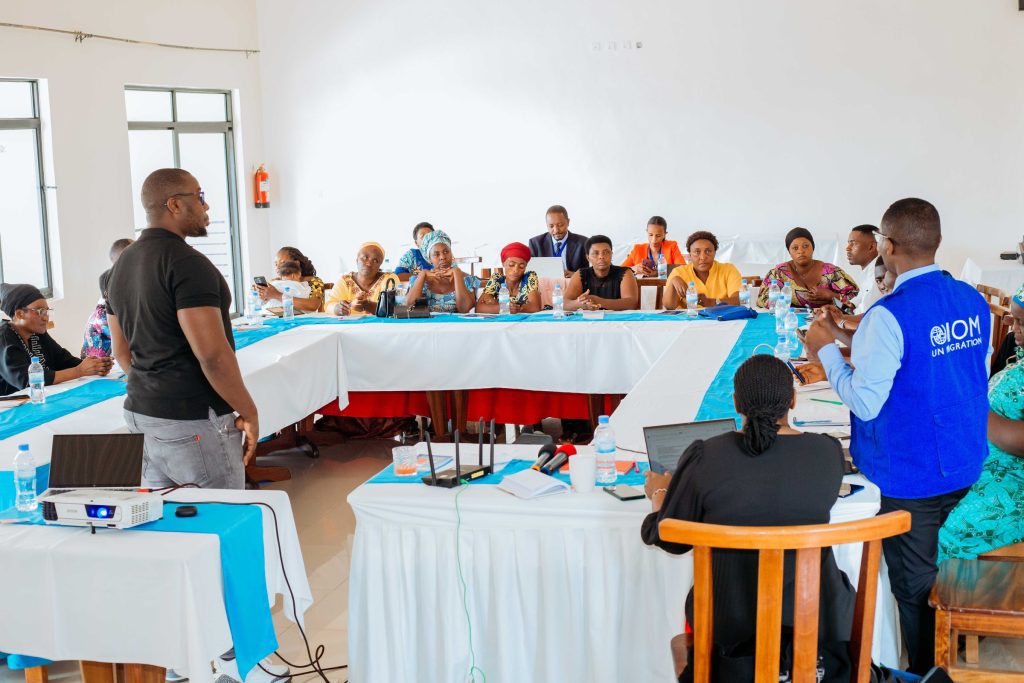
Sauti developed integrated USSD, WhatsApp and touchscreen information services for IOM Rwanda, expanding access to market intelligence, trade procedures, financial guidance and social services. The multilingual platforms are designed to support women, youth and other underserved cross-border traders.
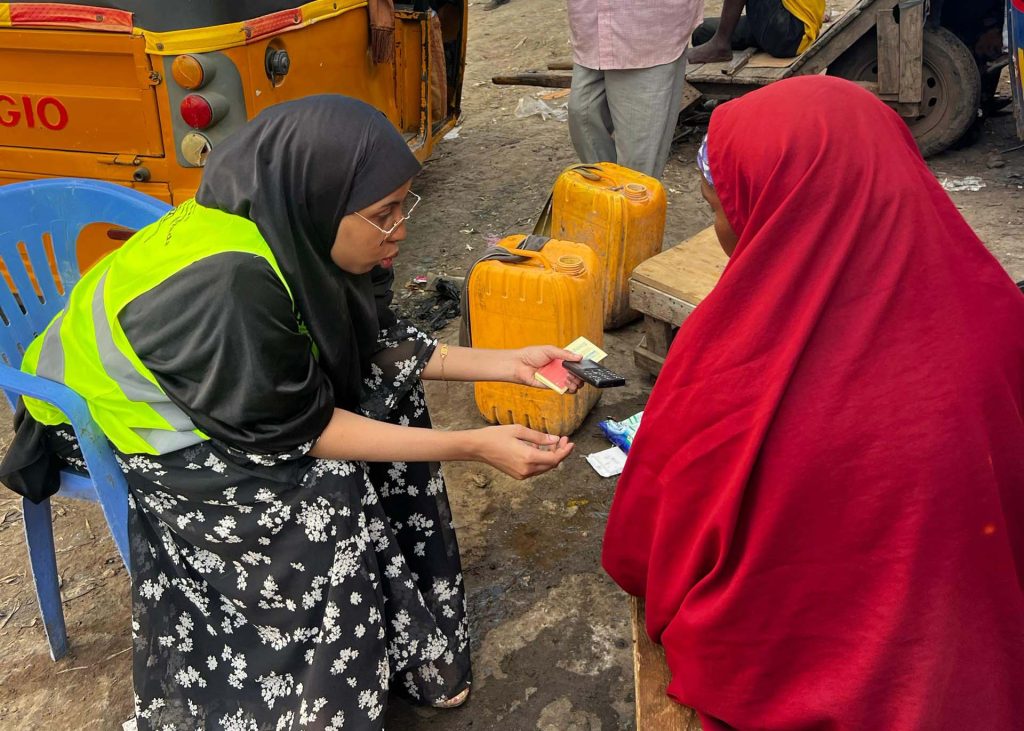
In partnership with IOM Somalia, Sauti developed Usheeg, a mobile platform delivering essential market, climate, early warning and protection information to vulnerable communities. The initiative reached over 20,000 users and trained more than 13,000 people through community outreach in Beledweyne and Jowhar.