
Amplifying Digital Opportunities for Cross-Border Traders in RwandaDigital Information Services
For IOM Rwanda, Sauti developed an integrated set of digital information services that help small-scale cross-border traders find practical business, financial and social-service information through USSD, WhatsApp and a touchscreen booth.
Under the International Organization for Migration (IOM) Amplifying Digital Opportunities for Cross-Border Trade initiative, Sauti East Africa worked to make reliable information accessible to traders moving across Rwanda’s borders. The intervention targets small-scale cross-border traders, especially women, young people and people who face digital or physical access barriers.
Instead of assuming one digital channel can meet everyone’s needs, the project brings together familiar mobile services and an assisted, publicly accessible touchscreen interface. These are supported by a shared information structure, enabling traders to seek the information most useful to their businesses and circumstances.
The Challenge
Cross-border traders depend on regularly changing information on trade procedures, prices, exchange rates, market opportunities, cooperative services and financial products. Information is often dispersed between customs and other government offices, market actors and development services. Finding the correct source can take time that small businesses cannot easily spare.
An IOM needs assessment highlighted demand for information points at border locations where traders could identify available services, find office directions and contact details, and access appropriate support. These needs are particularly pronounced among traders who have limited digital literacy, use basic mobile phones, are unfamiliar with formal trade procedures or need assistance navigating administrative services.
Women and other vulnerable groups also need accessible information about health and psychosocial services, alongside everyday business information. A viable system needed to accommodate different languages, literacy levels and preferred channels without separating economic information from relevant protection and social-service resources.
The Project
Sauti developed three connected information interfaces: an interactive USSD service, automated WhatsApp information workflows and a touchscreen information booth designed for installation in an accessible location. The digital platform uses a common information approach but adapts the user experience for people accessing the service from personal phones or a physical kiosk.
Content categories and service functions include:
- Trade information: border procedures, East African Community trade guidance and relevant service-provider contacts;
- Market intelligence: commodity prices, exchange rates and weather information;
- Business and financial knowledge: financial literacy, cooperative management and information on economic opportunities;
- Social support: contacts, directions and information about health, referral and other services available to traders; and
- Multilingual accessibility: touchscreen language choices including Kinyarwanda, English, Swahili and Luganda.
The development process combined the IOM needs assessment with service mapping, simplified language, interface prototyping, programme consultation and technical testing. Sauti demonstrated the booth prototype to IOM and other stakeholders, including a simulator showing the proposed navigation. The team also explored optional voice-based or natural-language assistance while distinguishing these potential enhancements from functions completed under the agreed core scope.
In parallel, Sauti worked on system configuration, session flows, content administration and technical integration. Deployment considerations included kiosk hardware, the registration and verification of a local WhatsApp business number, and the translation and validation of information in locally relevant languages.
Results
Latest verified delivery status (12 February 2026)
- USSD programming completed: menu designs, session-flow configuration, back-end/front-end integration and functional testing were reported complete.
- WhatsApp programming completed: automated response flows, information triggers and required platform workflows were configured and tested.
- Touchscreen programming completed: the booth interface, functional mapping and interactive commands were programmed and tested, with the programmed interface responding as specified.
- Information architecture established: the three channels provide a foundation for consistent, simplified trader-facing information and service directories.
The February 2026 report also identified remaining launch dependencies. WhatsApp business number acquisition, information simplification and translation were ongoing, while stakeholder engagement and procurement of kiosk hardware continued. Completion of the digital programming therefore should not be confused with completed public deployment or measured beneficiary uptake.
Project contribution: The assignment demonstrates how a low-bandwidth mobile service can be combined with a touchscreen interface for traders who benefit from assisted access. Verified final user-reach figures and outcomes should be incorporated if and when an approved end-of-project report establishes them.
Similar Projects by Sauti
SokoGrid transforms fragmented agricultural market data into actionable intelligence through automated data validation, machine learning and predictive analytics. Covering more than 300 commodities and 200 markets, the platform supports evidence-based decisions on pricing, sourcing and market risks across East Africa.

Sahan Mobile simplifies the deployment of USSD and SMS services across Somalia by providing organizations with one integration and one point of contact. Connecting Hormuud, Telesom and Somtel, the service enables coordinated delivery of mobile information services across multiple networks.
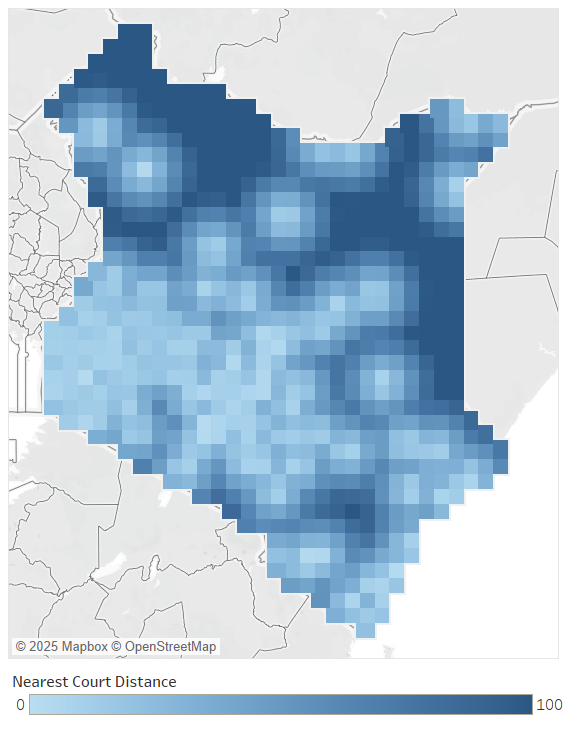
Sauti researchers applied geospatial analysis and population data to examine the distance between Kenyan communities and court infrastructure. Published in the Journal of African Law, the research provides evidence to support more equitable access to justice and targeted legal-service delivery.
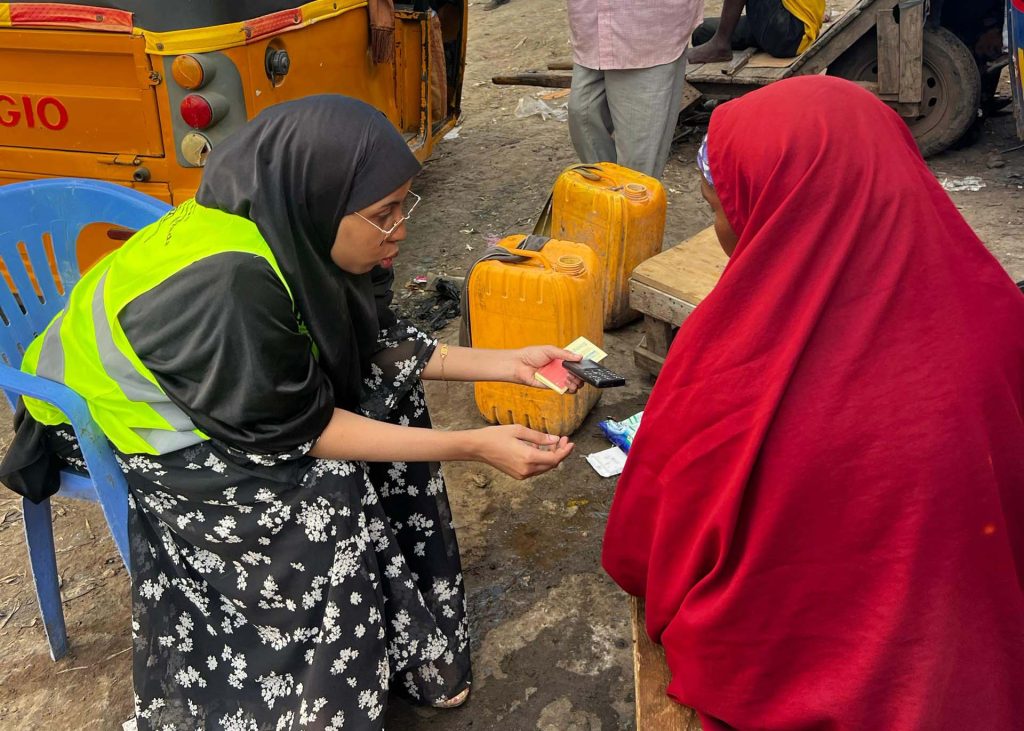
In partnership with IOM Somalia, Sauti developed Usheeg, a mobile platform delivering essential market, climate, early warning and protection information to vulnerable communities. The initiative reached over 20,000 users and trained more than 13,000 people through community outreach in Beledweyne and Jowhar.