
Strengthening Women’s and Youth Participation in Regional Agricultural TradeResearch and Evidence
Working within an Imani Development-led assignment for AGRA, Sauti contributed research and analysis to identify trade barriers, assess regional reporting mechanisms and inform strategies for greater participation by women and youth in agricultural trade.
Supporting inclusive agricultural trade requires evidence about how barriers operate at the borders, within transport corridors and along entire value chains. For AGRA’s women and youth in trade agenda, Imani Development led a multi-part research programme, with contributions from Sauti East Africa in field research and evidence generation.
The work examined agricultural trade across East, Southern and West Africa, focusing on young entrepreneurs and women-led businesses whose experiences can be obscured in trade statistics and formal complaints systems. The findings were intended to support prioritization of future trade-facilitation and market-development interventions.
The Challenge
Non-tariff barriers—including road fees, inconsistent standards, complex customs procedures, administrative delays and import restrictions—reduce the competitiveness of agricultural traders. For small-scale businesses, unexpected payments or documentation requirements can absorb a substantial share of their working capital.
Young traders and women also face barriers that are not typically captured in official trade monitoring systems, such as difficulty obtaining travel documents, poor access to information and finance, and exposure to harassment or violence. These risks can discourage formal trade and remain underreported when complaint processes are difficult or intimidating.
Identifying the right interventions requires a combination of data on trade corridors and priority agricultural products with direct evidence from traders, processors, government institutions and associations. It also requires distinguishing the reporting of a barrier from its actual resolution.
The Project
Within the AGRA assignment, Sauti provided research and analytical support, drawing on its experience in informal trade, digital information platforms and field-based evidence collection. The programme included value-chain prioritization, baseline indicators, stakeholder mapping and an assessment of non-tariff-barrier reporting, monitoring and elimination mechanisms.
The final research reviewed both formal systems and the obstacles experienced by traders using targeted corridors in:
- East Africa: Busia and Mutukula, with priority agricultural value chains including poultry, maize and beans;
- Southern Africa: Mwami–Mchinji and Nakonde, including poultry, maize, beans and fish; and
- West Africa: the Tema–Ouagadougou corridor and regional markets, including maize, cassava and horticulture.
The wider study combined desk research, reviews of regional NTB complaint platforms, stakeholder consultations, key informant interviews and cross-border surveys. The analysis compared the experiences of younger and older traders, women and men, and different agricultural value chains.
It also considered the capacity of cross-border trader associations to provide trustworthy guidance, help members lodge complaints and represent groups whose experiences were insufficiently reflected in official monitoring systems. Recommendations were designed to address immediate trader constraints and institutional weaknesses in regional trade governance.
Results
Completed research findings
- The work-package report drew on 645 trader and processor survey participants across the target regions—369 traders and 276 processors—alongside literature and more than 60 key informant interviews.
- Analysis confirmed the importance of road user charges, roadblocks, health and food-safety inspections, certificates of origin and administrative requirements, with patterns differing by corridor and product.
- The research identified barriers disproportionately affecting young women, including travel-document access, safety, harassment and difficulties engaging with formal complaint mechanisms.
- Its assessment found that NTB reporting platforms often do not disaggregate complaints by gender and age and frequently underrepresent risks affecting the movement and personal safety of traders.
- The report presented recommendations for simplified procedures, better mobile reporting options, stronger trader associations and targeted capacity building.
Similar Projects by Sauti

SokoGrid transforms fragmented agricultural market data into actionable intelligence through automated data validation, machine learning and predictive analytics. Covering more than 300 commodities and 200 markets, the platform supports evidence-based decisions on pricing, sourcing and market risks across East Africa.

Sahan Mobile simplifies the deployment of USSD and SMS services across Somalia by providing organizations with one integration and one point of contact. Connecting Hormuud, Telesom and Somtel, the service enables coordinated delivery of mobile information services across multiple networks.
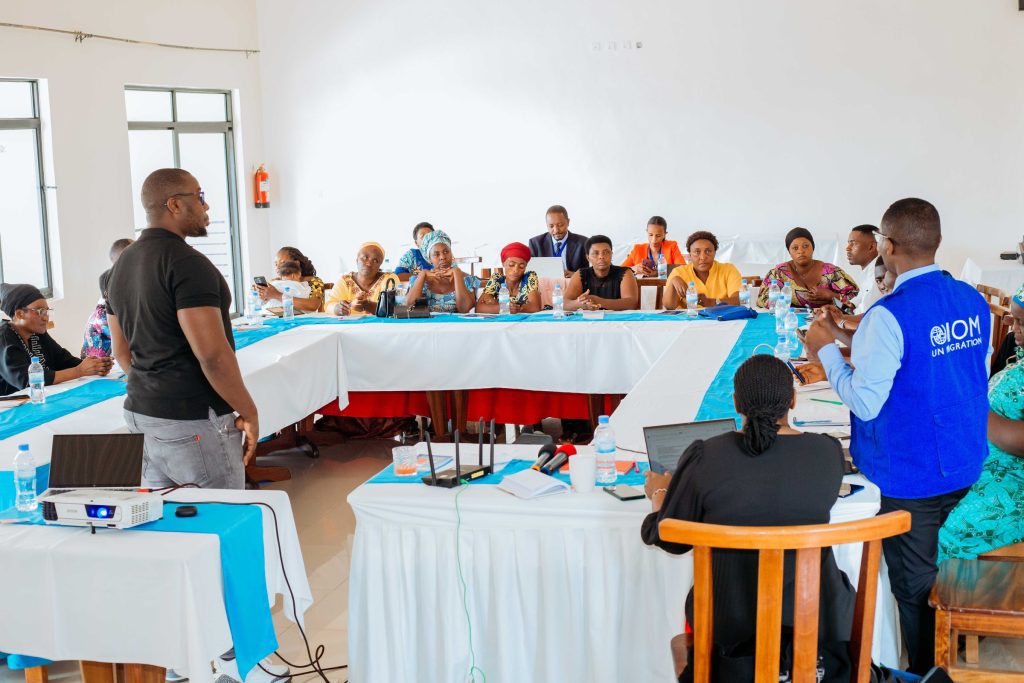
Sauti developed integrated USSD, WhatsApp and touchscreen information services for IOM Rwanda, expanding access to market intelligence, trade procedures, financial guidance and social services. The multilingual platforms are designed to support women, youth and other underserved cross-border traders.
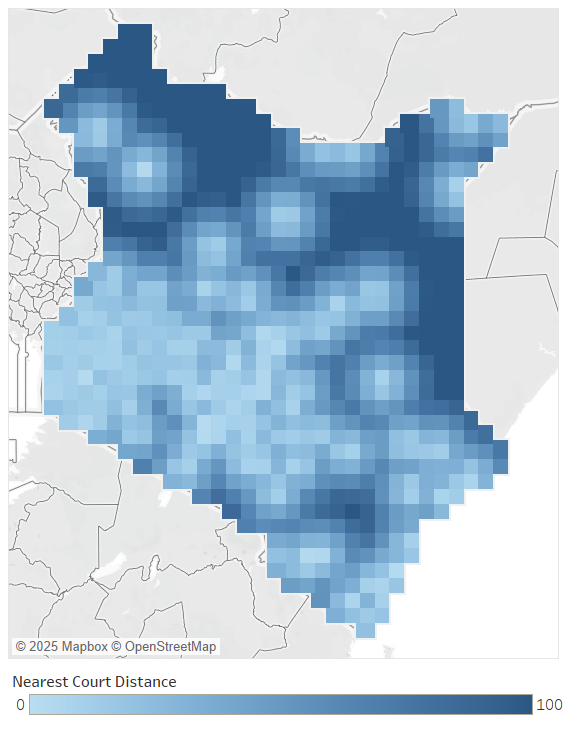
Sauti researchers applied geospatial analysis and population data to examine the distance between Kenyan communities and court infrastructure. Published in the Journal of African Law, the research provides evidence to support more equitable access to justice and targeted legal-service delivery.