
Expanding Digital Market Access for Women in Trade in KenyaAgriculture Value-Chain Development
Supported by TradeMark East Africa, Sauti expanded its mobile market and trade information services for women-led businesses, combining USSD, SMS and WhatsApp with financial, agricultural and business information and practical training.
The Women in Trade programme supported women producers, traders and entrepreneurs seeking to participate more safely and profitably in Kenya’s agricultural markets. Sauti’s contribution built on its established mobile information platform, expanding the content, channels and user support available to women-led enterprises.
The intervention connected digital service development with community-level sensitization and skills building. By meeting women traders through mobile channels they could use, the programme aimed to reduce barriers to practical information rather than relying solely on face-to-face advice or smartphone applications.
The Challenge
Women entrepreneurs often encounter information barriers that affect the costs and risks of their commercial activities. Understanding current prices, locating buyers, accessing affordable finance and knowing formal trading requirements can each require substantial effort, particularly for businesses operating at small scale with limited working capital.
Many rural women use basic mobile phones and face uneven connectivity. Even when regulatory guidance or support services are available online, they may not be presented in accessible formats or tailored to the seasonal and day-to-day decisions of farmers and traders. Limited time, language barriers and familiarity with formal financial services can compound these problems.
The programme therefore had to go beyond providing a list of market prices. It needed to connect information on agriculture, trading, business development and financial inclusion with channels that could reach women in the counties and markets where they already worked.
The Project
Within the Women in Trade programme, Sauti expanded its USSD/SMS platform and added WhatsApp functionality, extending the kinds of guidance that small businesses could request. Development included content organization, adaptation of menu flows and database improvements to support new information categories and evolving user requirements.
The mobile services incorporated:
- Market and trade information, including information relevant to sourcing, pricing and trading decisions;
- Business and financial services, including financing opportunities, digital financial tools and relevant business guidance;
- Agricultural knowledge, including practical production advice and market-linked farming information;
- Village savings and loan association information and support relevant to women’s enterprise finance; and
- Support for safer and more informed trade, including regulatory, legal and other services identified through user needs.
The work was delivered in a broader programme alongside partners including Partner Africa and TruTrade. Local implementation engaged women entrepreneurs and stakeholder networks in counties including Siaya, Makueni, Kilifi, Migori and Bungoma. Outreach combined market-based sensitization, engagement with local partners, radio communications and training-of-trainers activities.
Feedback from women traders helped shape the platform’s architecture, information priorities and navigation. Sauti also developed the technical foundations for managing content and analysing activity, enabling improvements based on which services users were accessing.
Results
Programme and close-out results
- 20,038 new women users were reported as having accessed Sauti’s platform since April 2021 in TradeMark East Africa’s 2021/22 reporting.
- 10,962 women accessed newly developed information features, demonstrating demand for the expanded service categories.
- 2,549 women were reported to have integrated the platform into their business activities by the same reporting point.
- Training-of-trainers workshops for 450 traders formed part of the completed programme activities documented in Sauti’s corporate project record.
- Sauti’s project summary reported an 11% improvement in users’ monthly profits in programme evaluations, alongside improved market and financial information access for approximately 20,000 women SMEs.
These indicators come from different reporting sources and reference points. The 20,038, 10,962 and 2,549 counts are from the 2021/22 annual reporting period, not a separately verified final cumulative endline. The profit figure is drawn from Sauti’s corporate project summary and should be supported with its underlying evaluation when reused as a causal impact claim.
Overall, the project provides evidence of Sauti’s ability to expand low-bandwidth information services across multiple business topics, while combining technology with training and community relationships to strengthen women’s access to practical trade resources.
Similar Projects by Sauti
SokoGrid transforms fragmented agricultural market data into actionable intelligence through automated data validation, machine learning and predictive analytics. Covering more than 300 commodities and 200 markets, the platform supports evidence-based decisions on pricing, sourcing and market risks across East Africa.

Sahan Mobile simplifies the deployment of USSD and SMS services across Somalia by providing organizations with one integration and one point of contact. Connecting Hormuud, Telesom and Somtel, the service enables coordinated delivery of mobile information services across multiple networks.
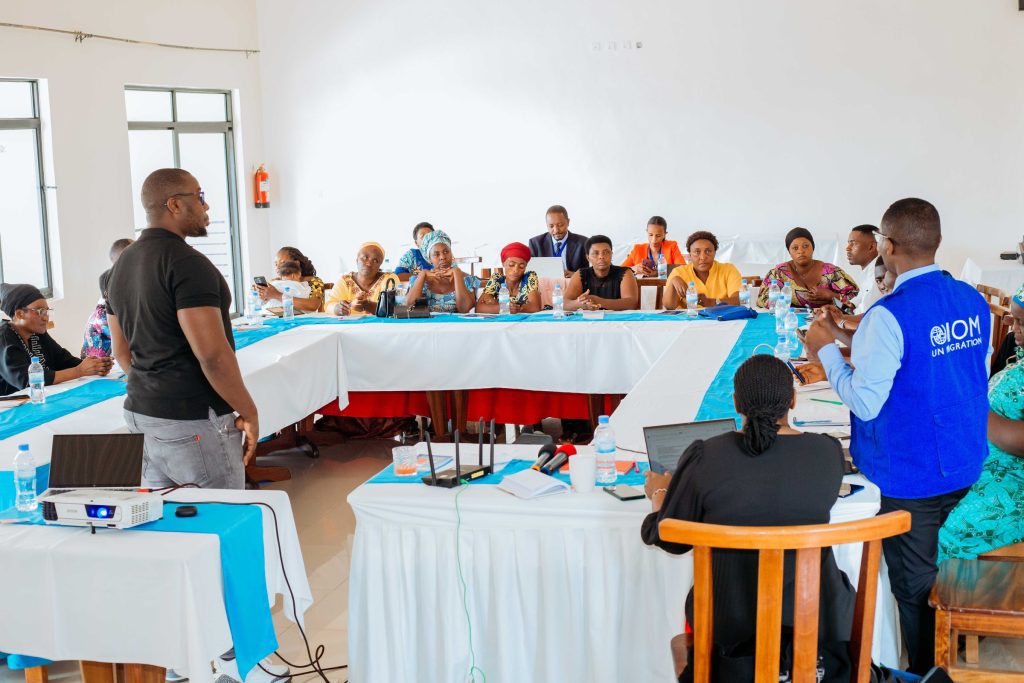
Sauti developed integrated USSD, WhatsApp and touchscreen information services for IOM Rwanda, expanding access to market intelligence, trade procedures, financial guidance and social services. The multilingual platforms are designed to support women, youth and other underserved cross-border traders.
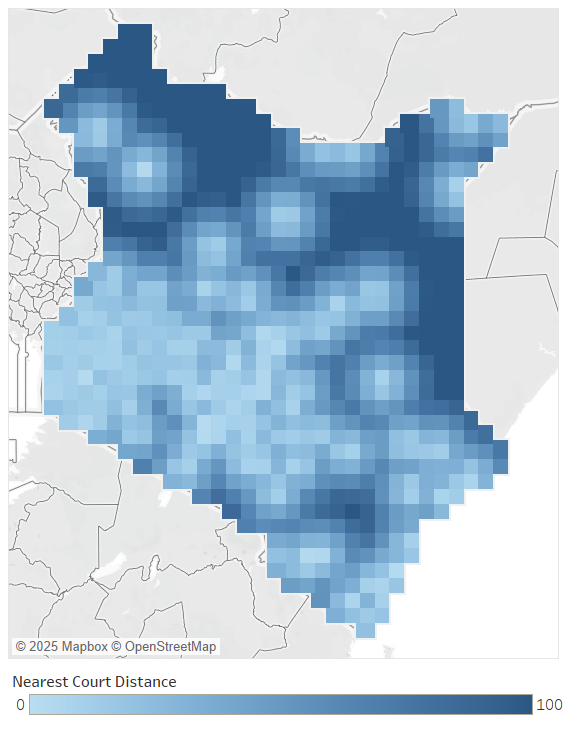
Sauti researchers applied geospatial analysis and population data to examine the distance between Kenyan communities and court infrastructure. Published in the Journal of African Law, the research provides evidence to support more equitable access to justice and targeted legal-service delivery.